
What Are the Top Use Cases for Tokenizing Retail and Office Real Estate Properties?
Businesses / Posted 8 months ago by suzie iris / 142 views
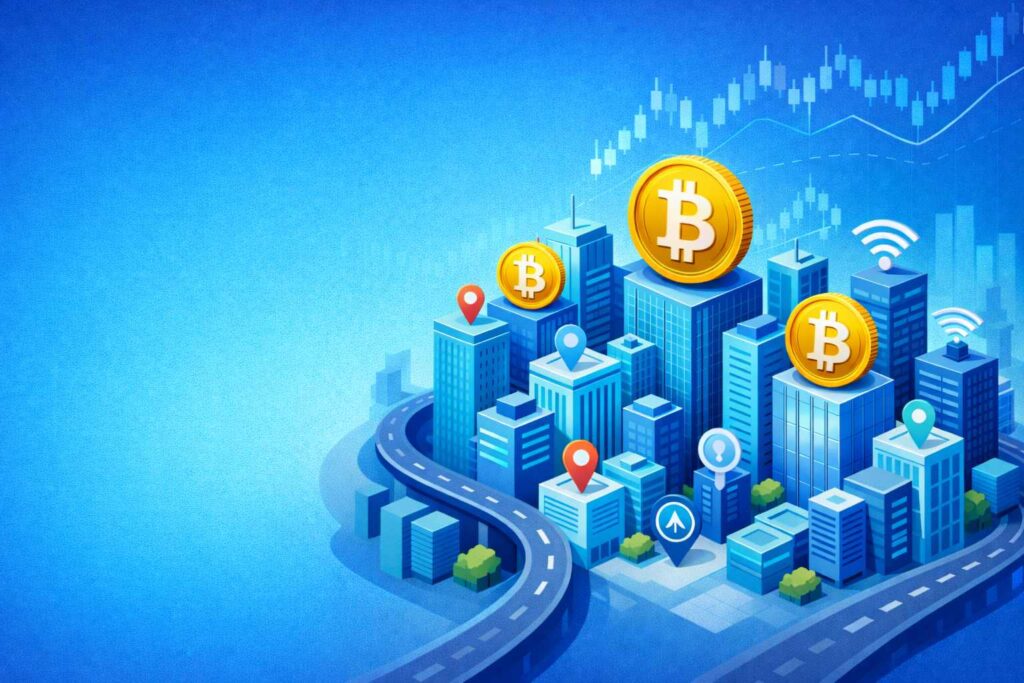
Tokenization of real estate is rapidly transforming how investors access, manage, and benefit from property assets. By converting ownership rights of retail and office properties into blockchain-based digital tokens, tokenization creates new opportunities for capital efficiency, liquidity, and innovative financial structures. Retail and office spaces, being highly commercial and revenue-driven assets, are particularly well-suited for tokenization because their cash flows, tenant structures, and operational metrics can be easily represented and managed digitally. In this context, tokenization aligns with broader trends in Web3 investment, decentralized finance (DeFi), and digital asset markets. The following sections explore the top use cases of tokenizing retail and office real estate, highlighting how these models benefit both investors and property owners.
1. Fractional Ownership and Diversified Investment Access
A primary use case for tokenizing retail and office properties is enabling fractional ownership. Traditional investments in high-value commercial buildings often require substantial capital, limiting participation to institutional investors or high-net-worth individuals. Tokenization divides ownership into smaller, tradeable units, allowing a wider investor base to participate.
For example, an office tower in a major metropolitan area can be tokenized so that thousands of individual investors each own a small share. This democratization increases access to premium commercial properties while simultaneously providing developers with a faster and more flexible capital-raising mechanism. Investors benefit from portfolio diversification, as they can allocate smaller amounts across multiple properties rather than committing a single large sum to one asset.
2. Enhanced Liquidity for Typically Illiquid Assets
Retail and office properties are traditionally illiquid investments, often requiring months or years to sell due to market size, valuation processes, and transaction complexity. Tokenization creates digital tokens that can be traded on secondary blockchain marketplaces, improving liquidity and enabling investors to buy or sell their stakes more efficiently.
Improved liquidity not only benefits investors by allowing flexible exit strategies but also benefits property owners, who can access capital more quickly without resorting to lengthy traditional property sales. Liquidity transforms these assets into more dynamic financial instruments, making them more attractive to both retail and institutional investors.
3. Revenue-Based Token Models
Retail and office properties generate predictable income streams through rents and lease agreements. Real Estate Tokenization allows the creation of revenue-sharing tokens, where token holders receive a proportional share of rental income automatically via smart contracts.
For instance, investors in a shopping center or office complex can receive dividend payments directly to their wallets on a monthly or quarterly basis, with distributions triggered by smart contracts based on collected rent. This automation reduces administrative overhead and ensures transparent, timely, and auditable payments, aligning with broader trends in DeFi and programmable finance.
4. Global Capital Raising and Cross-Border Investment
Tokenization platforms facilitate access to a global pool of investors. Retail and office property owners can raise capital from investors in multiple countries without the friction of traditional cross-border investment channels.
This global reach allows property owners to optimize funding sources and attract investors with varying risk appetites and investment capacities. International investors, who may not otherwise have access to local commercial real estate markets, can participate through compliant tokenized offerings. This global capital access accelerates fundraising timelines and enhances the efficiency of capital deployment for both development and acquisition projects.
5. Portfolio Diversification and Risk Management
Tokenization enables investors to diversify their portfolios across multiple retail and office properties with lower capital commitment. Instead of owning a single building, investors can hold tokens representing shares in several properties across different locations or commercial segments.
This diversification reduces exposure to risks associated with individual tenant defaults, market fluctuations, or geographic concentration. For property owners, fractionalized investments can reduce reliance on a single funding source, making projects more resilient to financial shocks or operational setbacks. Diversified token portfolios mirror practices seen in traditional securities and mutual funds but with added benefits of blockchain-enabled liquidity and transparency.
6. Smart Contracts for Automated Management
Blockchain smart contracts are a key feature in tokenized retail and office properties. These programmable agreements can automate rent collection, expense allocation, lease management, and dividend distribution.
For office buildings with multiple tenants or shopping centers with complex lease agreements, smart contracts ensure accurate, real-time accounting and distribution. Automated processes reduce operational overhead, lower the risk of human error, and enhance trust and transparency among token holders. Smart contracts also enable more sophisticated investment structures, such as conditional revenue sharing or performance-based payouts tied to occupancy or sales metrics.
7. Enabling Short-Term or Flexible Investment Models
Tokenization supports innovative investment horizons beyond traditional long-term property ownership. Retail and office tokens can be structured for short-term holding periods, allowing investors to capitalize on market trends or temporary opportunities.
For example, during periods of high demand for office space in a business district, token holders can trade tokens quickly, capturing short-term value. This flexibility is especially useful for institutional investors, hedge funds, or high-frequency traders seeking exposure to commercial real estate without long-term illiquidity constraints. Short-term tokenized investment models make retail and office properties more responsive to market conditions and attractive to a broader investor base.
8. Facilitating Real Estate Development and Renovation Funding
Tokenization can also be used to fund property development, renovations, or value-add projects for retail and office properties. Developers can issue tokens representing future ownership stakes or revenue entitlements, raising capital efficiently without relying entirely on bank loans or traditional equity investors.
For example, a shopping center undergoing modernization can issue tokens tied to projected future revenue. Investors gain access to potential upside, while developers secure funds to execute renovations promptly. This use case aligns with broader capital markets trends in asset-backed financing and enables faster project execution, ultimately enhancing the value of the underlying property.
9. Integration with DeFi and Digital Asset Ecosystems
Tokenized retail and office properties can integrate with decentralized finance platforms for lending, borrowing, or liquidity provision. Property tokens can be used as collateral for loans, participate in yield-generating liquidity pools, or be incorporated into structured digital financial products.
This integration transforms static real estate holdings into active, revenue-generating digital assets. Investors gain multiple avenues for capital utilization, while property owners benefit from increased access to liquidity and diversified funding options. Such integrations align retail and office real estate investments with the broader Web3 ecosystem, making these assets part of the evolving decentralized financial landscape.
10. Enhanced Transparency, Compliance, and Investor Trust
Blockchain’s immutable ledger provides transparent ownership records, transaction histories, and operational data. For retail and office properties with multiple tenants, revenue streams, and lease agreements, this transparency is particularly valuable.
Tokenization platforms can embed regulatory compliance measures, such as KYC/AML verification, into the token issuance process. Investors can confidently participate knowing that ownership and revenue distribution are transparent, auditable, and secure. This builds trust, encourages broader investor participation, and aligns with evolving standards in digital asset investment.
Conclusion
Tokenizing retail and office real estate properties represents a convergence of traditional commercial real estate investment with the efficiency, transparency, and flexibility of blockchain technology. Key use cases include fractional ownership, liquidity enhancement, revenue-sharing models, global capital access, smart contract automation, short-term investment opportunities, development funding, integration with DeFi, and enhanced transparency and compliance.
These use cases collectively improve capital efficiency, reduce operational frictions, and democratize access to high-value commercial properties. As blockchain adoption and Web3 infrastructure mature, tokenization of retail and office real estate is poised to become a mainstream investment model, enabling more dynamic, inclusive, and efficient property markets that align with the demands of modern investors and developers.
- Listing ID: 78200